
1. The New Creative Speed
We are experiencing the greatest change in the history of ideation. For centuries, the time between having an idea and seeing a sketch was measured in hours or days. An artist had to train their hand for decades to accurately draw what was in mind. Today, Artificial Intelligence has reduced that latency to seconds. Generative AI tools allow artists, designers, and architects to iterate hundreds of concepts in an afternoon. They can explore variations in shape, texture, and style: write "baroque bronze sculpture mixed with cybernetic circuits" and instantly see 50 variations.
This speed of iteration is not just a novelty; it is a profound creative multiplier. It allows creators to fail faster, discard weak ideas more quickly, and reach a truly unique concept without having to dedicate weeks to manually crafting sketches. The barrier to entry for complex and high-concept design has never been so low. However, this explosion of digital creativity has hit an insurmountable wall: the screen. These AI creations are often trapped as 2D pixels or "hallucinated" 3D meshes that defy physics. They look incredible on Instagram but lack mass, weight, and have no way of existing in the real world.
At Arteico, we position ourselves as the bridge between this new "synthetic imagination" and physical reality. We believe that an AI-generated idea is only as good as its execution. The market is flooded with digital noise; the way to stand out is to take that ethereal, computer-generated concept and manifest it in the most permanent historical material available: solid bronze. We validate the virtual by making it eternal.
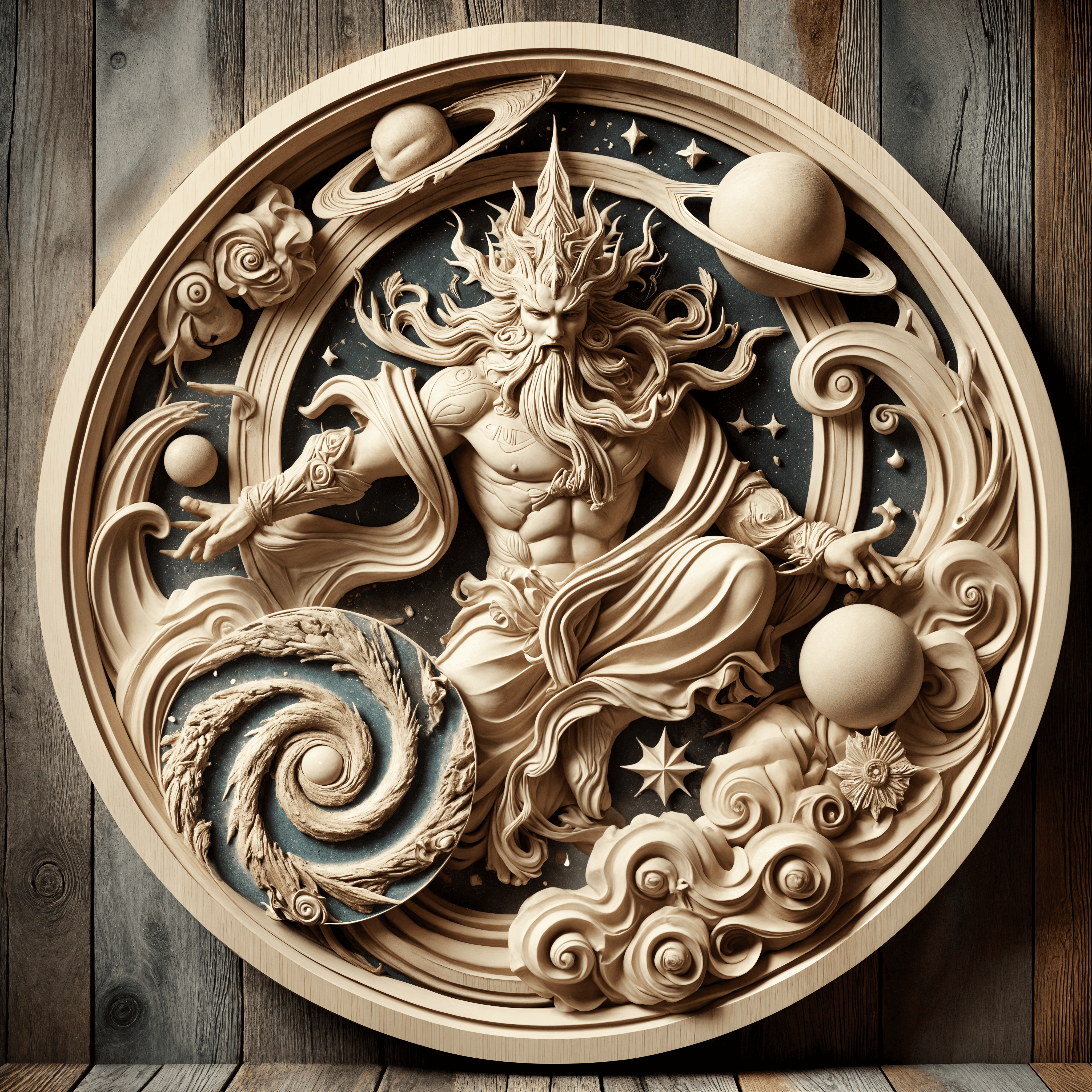
2. Fixing the "Hallucinations"
The challenge with AI-generated 3D models is that they are often inadequate from an engineering perspective. An AI can generate a beautiful sculpture with floating pieces, impossible thinness, or interlocking geometries that would collapse under their own weight. It designs for sight, not for gravity. If you tried to print and cast the raw AI result, the print would fail, or the molten bronze would destroy the mold.
This is where our engineering team steps in. We take the raw and chaotic AI result and "rationalize" it. We use advanced sculpting software to retopologize the mesh, reconstructing the surface to be waterproof and manufacturable. We add thickness where the AI made it too thin, add structural supports where it defied gravity, and clean up the "digital artifacts" (odd bumps or failures) that the algorithms leave behind. We turn a visual suggestion into a structural blueprint.
3. The Ultimate Contrast
There is a poetic irony in casting AI art in bronze. Bronze is an alloy of copper and tin, a material humanity has used since 3000 B.C. It represents ancient history, craftsmanship, and permanence. AI represents the fleeting, the digital, and the instant future. By combining them, we create objects with a unique tension. We are freezing an algorithmic thought of a fraction of a second in a metal that will endure for thousands of years.
This capability is attracting a new wave of "Hybrid Artists": creators who don’t know how to sculpt clay but can program. They bring us forms that no human hand would naturally create: recursive fractals, hyper-complex biological textures, and frozen fluid dynamics. These forms push our 3D printers and casting techniques to the limit, forcing us to innovate every day.
Ultimately, Arteico is the foundry of posthuman imagination. We are proving that AI is not the death of craftsmanship, but its new companion. By combining the infinite speed of AI iteration with the slow, deliberate quality of master bronze casting, we are helping artists take the impossible from the server and bring it to the gallery.