1. The Physics of the Colossal
When we stand before a monumental bronze sculpture, whether it is an imposing public monument or a massive abstract installation in a corporate lobby, we are struck by its unified presence. It appears to be a single, solid entity. However, the reality of the foundry is subject to strict physical limits. No crucible can hold infinite metal, nor can any furnace accommodate a ten-meter structure. To create the colossal, we must first master the art of fragmentation. Every giant is, in reality, a complex three-dimensional puzzle waiting to be assembled.
Historically, the process of "enlarging" a sculpture, from an artist's small maquette to a monument, was an arduous multi-year undertaking involving a device called a pointing machine. Artisans manually measured points on the small model and scaled them up to a large clay armature, applying thousands of pounds of wet clay by hand. This process was not only exhausting, but it often resulted in a "stiffening" of the artwork. The dynamic fingerprints and subtle gestures of the original artist were often lost in translation as the scale increased. At Arteico, we have replaced this laborious scaling with digital precision. We begin by scanning the artist's original small-scale model, preserving every nuance of texture and emotion, and digitally scale it to the desired size. Whether the final piece is two or twenty meters high, the geometry remains mathematically identical to the original creation. We do not reinterpret the work; we simply scale its magnitude.
2. Strategic Segmentation and Internal Structure
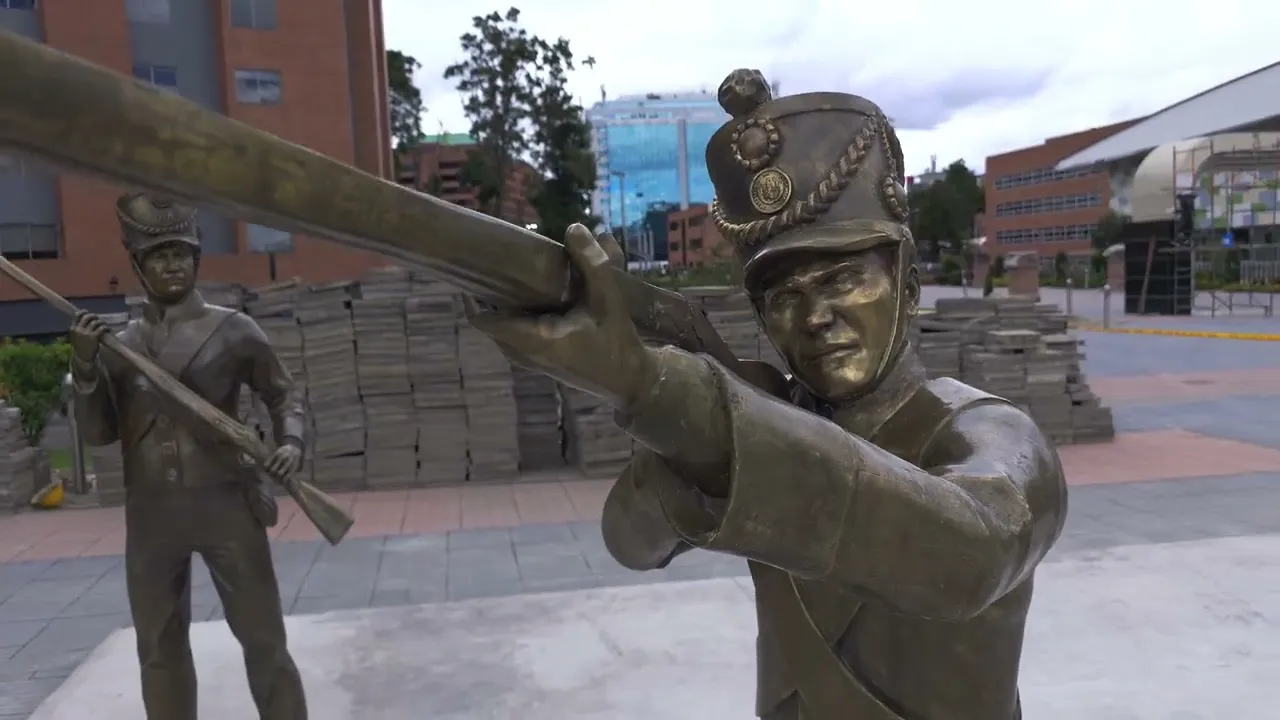
Once the model is scaled, the engineering phase begins. We cannot simply 3D print a five-meter statue in one piece; we must strategically "slice" the digital model into manageable sections that fit our 3D printers and casting flasks. This is not a random process. Our engineers analyze the sculpture to place seam lines in areas of low visual impact, hiding them behind natural folds, clothing creases, or texture changes whenever possible to minimize post-processing work.
Crucially, we design the assembly logic before any metal is poured. In the digital environment, we can engineer interlocking keys, flanges, and registration marks directly into the printable sections. This turns the assembly process into a precise mechanical operation rather than a guessing game. We also design the internal stainless steel armature—the skeleton that supports the bronze—ensuring its seamless integration with the cast sections to withstand wind loads, gravity, and seismic activity.
3. The Art of the Invisible Seam
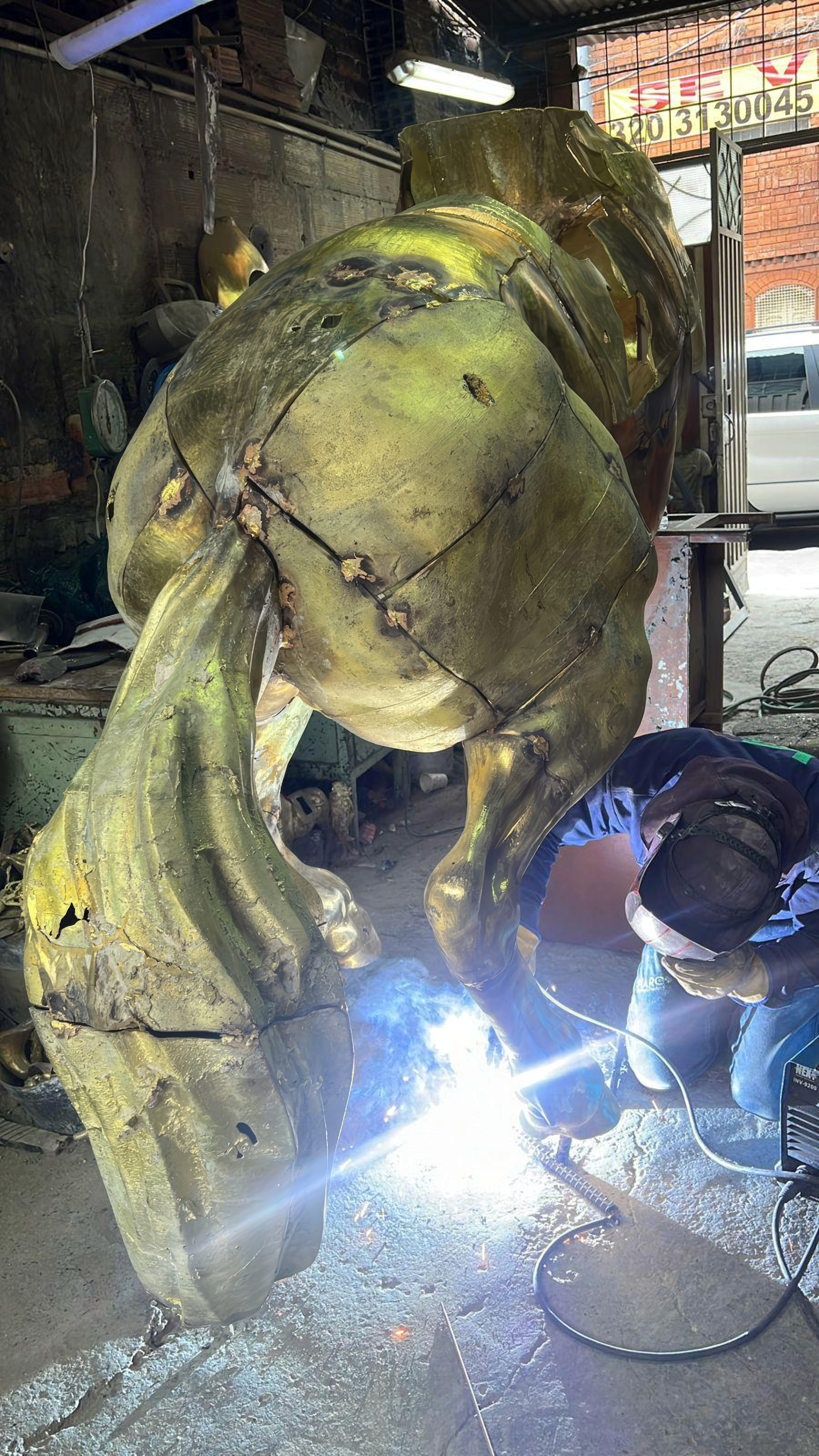
After the individual sections are cast in bronze, the physical assembly begins. This is where the digital workflow hands the baton to artisan craftsmanship. Our welders use TIG (tungsten inert gas) welding techniques, using rods made from the exact same bronze alloy as the casting. This ensures the weld matches the color and chemical properties of the surrounding metal, preventing the color distortions that can occur with subpar filler materials.
Once welded, the "chasing" team takes over. Chasing is the rigorous process of grinding, sanding, and texturing the metal to erase the weld lines. Because our digital slicing provided a perfect fit, the gap is minimal, allowing our artisans to blend the surface texture seamlessly. They re-carve any lost details along the seam until the joint becomes invisible to the naked eye and the touch.
The final result is a monumental structure that retains the soul of a sketch. By combining digital scalability with traditional metalworking mastery, we allow artists and architects to dream without size limitations. We remove the logistical nightmare of monumental work, ensuring that the only limit on the sculpture is the size of the vision, not the capacity of the furnace.